
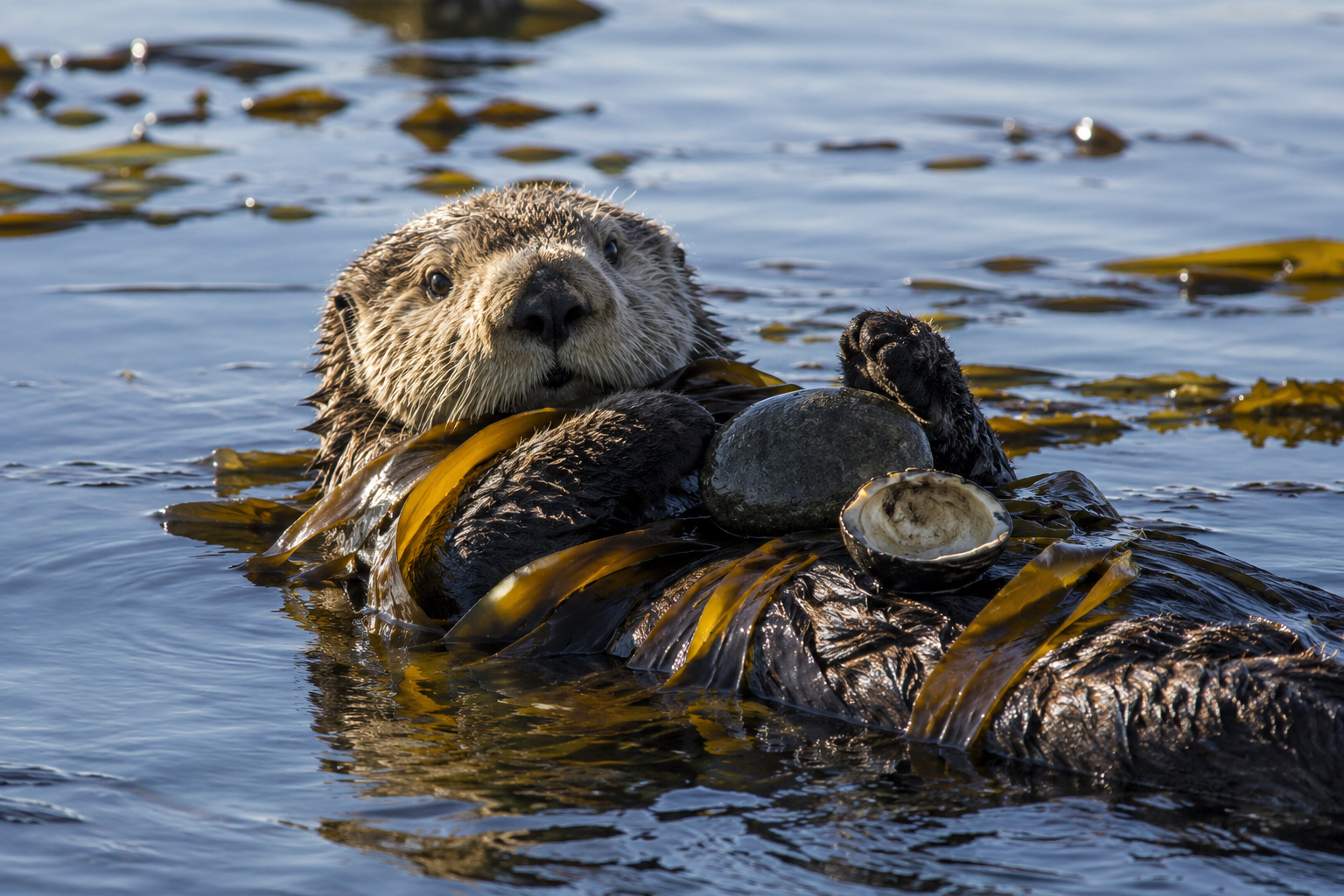
Sea otters look like they spend their whole lives goofing around, floating on their backs, cracking shellfish open on their bellies. That image is accurate, but it undersells them. Sea otters are a keystone species: pull them out of a kelp forest and the whole ecosystem tends to collapse within a few years. Understanding why starts with understanding what they eat.
What do sea otters eat?
Sea otters are carnivores with an enormous appetite relative to their size. Unlike seals or whales, they have almost no blubber, so they rely entirely on a thick coat of fur and a very high metabolism to stay warm in cold Pacific water. That metabolism is expensive to run: a sea otter typically eats somewhere between 25 and 30 percent of its body weight every single day just to maintain its body temperature.
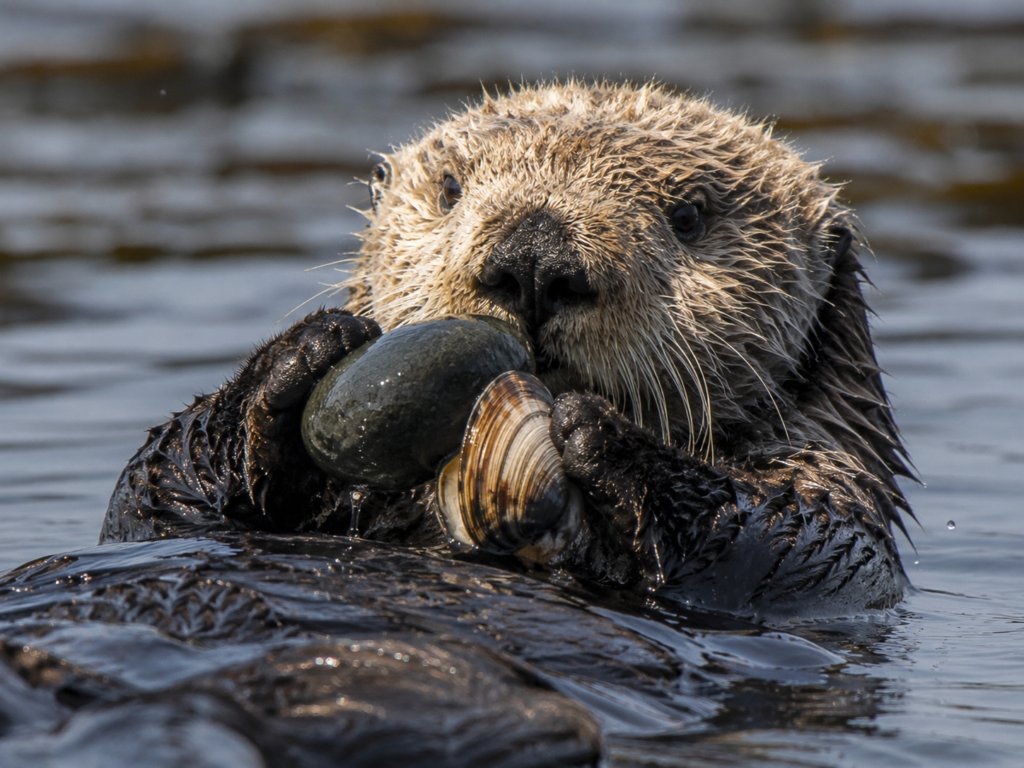
Their diet is dominated by slow-moving invertebrates that live on the seafloor:
- Sea urchins
- Abalone
- Clams and mussels
- Crabs and snails
- Sea stars, octopus, and a range of other shellfish
Altogether, sea otters are known to feed on roughly 40 different marine species. They’re also one of the few animals that use tools: an otter will often carry a flat rock to the surface, rest it on its chest, and smash a shell against it to get at the meat inside.
Do sea otters eat sea urchins? Yes, and this single fact is the reason otters matter so much ecologically. Sea urchins graze on kelp, and without a predator to keep urchin numbers in check, they multiply and strip kelp forests bare, leaving behind what marine biologists call “urchin barrens”: rocky, nearly lifeless stretches of seafloor. By keeping urchins in check, otters protect kelp forests that shelter fish, absorb carbon, and support coastal fishing economies. Remove the otter, and the kelp forest often goes with it.
Are sea otters endangered? Why?
Yes. The sea otter is currently listed as Endangered on the IUCN Red List, and in the United States, two of its population segments (the southern, or California, sea otter, and the southwest Alaska stock) carry additional protection as threatened species under the Endangered Species Act.
The story behind that status has two very different chapters.
Chapter one: the fur trade. Sea otter fur is the densest of any mammal on Earth, with fur density estimated at up to a million hairs per square inch. That density made it one of the most valuable pelts in the world starting in the mid-1700s, and hunting was so intense that by 1911, when international protection finally arrived through the North Pacific Sealing Convention, the global population had crashed from a historic high of 150,000 to 300,000 animals down to somewhere between 1,000 and 2,000 survivors, clinging on in isolated pockets of Alaska, Russia, and California.
Chapter two: slow, uneven recovery. Since 1911, sea otters have recovered substantially in some areas and stalled or declined in others. Worldwide numbers are now estimated at around 128,000, but that population is fragmented rather than continuous, and the details vary a lot by region:
- California’s southern sea otters number only around 3,000, well below the roughly 3,090 needed for three consecutive years before the U.S. Fish and Wildlife Service would even consider removing their threatened status. Their range is still a fraction of its historic size.
- Southwest Alaska’s population has actually declined by more than 50 percent since the mid-1980s, driven partly by a documented rise in killer whale predation.
- Other populations, in south-central and southeast Alaska, British Columbia, and Washington, have grown steadily and are generally considered stable or recovering.
The modern threats driving these declines are different from the fur trade. The biggest ones today are:
- Oil spills — sea otters have no blubber, so oiled fur loses its insulating power almost immediately, and a single large spill (like the 1989 Exxon Valdez disaster) can kill thousands of animals at once.
- Disease, particularly toxoplasmosis, a parasite that reaches coastal waters through cat litter and runoff and can cause fatal brain infections in otters.
- Entanglement in fishing gear, which can drown otters directly.
- Predation pressure from sharks and, in parts of Alaska, killer whales, which has intensified in some regions as other prey has become scarcer.
- Kelp forest loss, tied to warming waters, which removes both food and shelter at once.
So the short answer to “why are sea otters going extinct” is: they aren’t disappearing the way they did in 1911, but their recovery has plateaued or reversed in key regions, and the threats keeping them there are now environmental and disease-driven rather than direct hunting.
How big are sea otters?
Sea otters are the largest members of the weasel family (Mustelidae) but small compared to most marine mammals people picture when they think “otter in the ocean.”
- Length: up to roughly 1.2 to 1.4 meters (about 4 to 4.6 feet), including the tail.
- Weight: males typically reach up to around 45 kilograms (about 99 pounds); females are noticeably smaller, generally in the 45- to 60-pound range.
- Fur: the defining feature. Sea otters have no blubber layer at all, so that famously dense fur, trapping a layer of insulating air against the skin, is the only thing standing between them and hypothermia in cold Pacific water.
How long do sea otters live?
In the wild, sea otters typically live 10 to 15 years if male, and 15 to 20 years if female, with a documented maximum in the wild of around 23 years. The gap between sexes comes down to lifestyle: males spend much of their adult lives fighting over territory and mates, which shortens their lifespans, while females avoid that physical toll but pay an energetic cost of their own by giving birth and nursing pups.
In captivity, where food is guaranteed and predators aren’t a factor, otters live noticeably longer. The oldest sea otter on record, a captive female named Etika at the Seattle Aquarium, reached 28 years old.
Whichever sex, a big part of what shortens a wild otter’s life isn’t predation or disease directly, but simple wear: their teeth grind down from a lifetime of cracking shells, and once that happens, foraging gets harder and health declines quickly.
Are sea otters dangerous?
Not to people, under normal circumstances. Sea otters are not predatory toward humans and generally avoid contact. The real risk runs the other way: otters can be seriously stressed by people approaching too closely, particularly mothers with pups, and wildlife agencies in California and Alaska actively discourage close encounters for the otter’s sake rather than the person’s. An otter that feels cornered or is handled directly can bite, but unprovoked attacks on people are not a documented pattern of their behavior.
What eats sea otters?
Sea otters have relatively few natural predators, in part because their coastal, kelp-forest habitat offers cover. The main ones are:
- Killer whales (orcas) — in parts of Alaska, a single orca has been estimated to be capable of eating well over a thousand otters in a year, and a documented shift toward otter predation is one of the leading theories behind the sharp population decline in the southwest Alaska stock.
- Sharks — great white sharks are known to bite otters, often fatally, off the California coast, though there’s some evidence sharks bite otters without eating them, which still causes deadly infections.
- Bald eagles — a significant predator of otter pups in Alaska, where eagles will snatch unattended young from the water’s surface.
How many sea otters are left?
Estimates put the current worldwide sea otter population at roughly 128,000 individuals, though the number is difficult to pin down precisely because not every regional population has been surveyed recently. For context, that’s still well below the historic pre-fur-trade population, which is thought to have been somewhere between 150,000 and 300,000. The largest current populations are in Alaska (with the southwest Alaska stock alone estimated around 52,000) and Russia’s Kamchatka coast, while California’s southern sea otter population, the most closely watched in the U.S., sits at around 3,000.
What is a group of sea otters called?
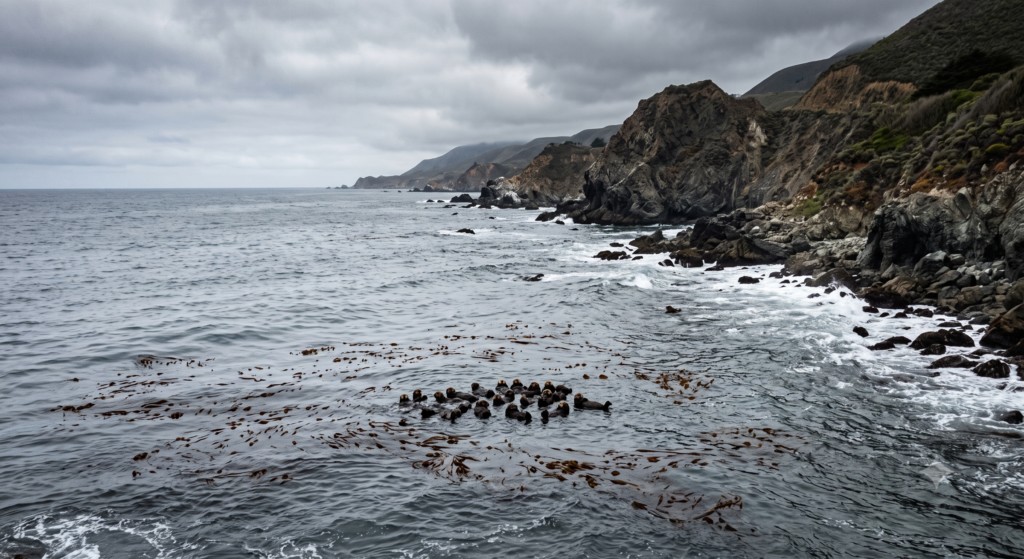
A group of sea otters resting or floating together on the water’s surface is called a raft. Rafts can range from a handful of animals to, in some historically dense populations, hundreds, and otters will often wrap themselves in strands of kelp before resting to keep from drifting apart while they sleep.
The bottom line
Sea otters punch well above their weight, ecologically speaking. A single otter’s daily appetite for sea urchins is what keeps entire kelp forests intact, which is exactly why their still-fragile, regionally uneven recovery from the fur trade matters well beyond the animal itself. Protecting sea otters, in most of the places where they’re struggling today, is really about protecting the coastline around them.
Leave a Reply