
The vast, mysterious ocean is home to countless extraordinary species, but few capture the imagination—and the palate—quite like the yellowfin tuna (Thunnus albacares). Revered by marine biologists, sport fishermen, and gourmet chefs alike, this remarkable fish is a true marvel of the marine world.
At Ocean Insights, we are passionate about uncovering the secrets of marine life. In this comprehensive 1500-word guide, we will explore every aspect of the yellowfin tuna—from its biology and behavior to its ecological importance and the threats it faces. Whether you’re a seafood lover, an angler, or simply an ocean enthusiast, this deep dive into the world of yellowfin tuna will leave you with a newfound appreciation for this incredible species.
1. The Yellowfin Tuna: A Biological Masterpiece
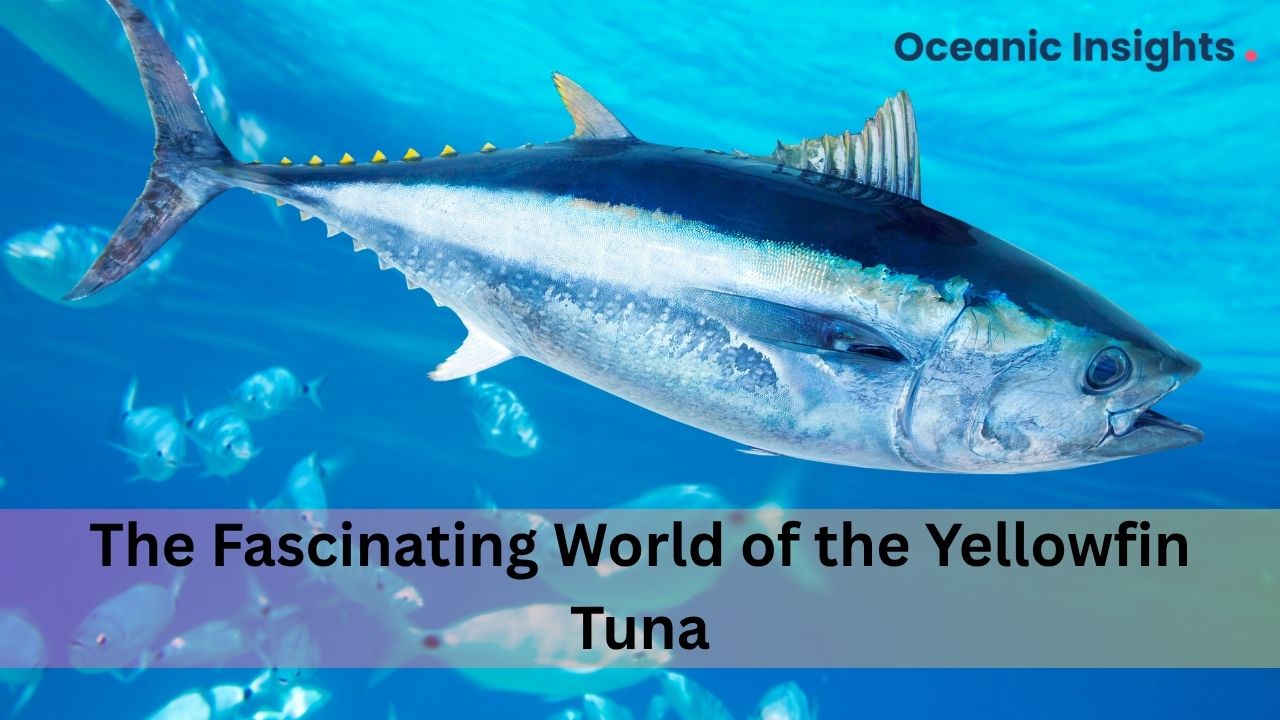
1.1 Physical Characteristics
The yellowfin tuna is easily recognizable by its:
- Vibrant yellow dorsal and anal fins
- Metallic blue-black upper body
- Silver-white underbelly (a form of countershading for camouflage)
- Streamlined, torpedo-shaped body built for speed
One of the largest tuna species, yellowfins can grow up to 7 feet (2.1 meters) in length and weigh over 400 pounds (180 kg). Their powerful muscles and hydrodynamic shape allow them to reach speeds of up to 50 mph (80 km/h), making them one of the fastest fish in the ocean.
1.2 Taxonomy & Relatives
The yellowfin tuna belongs to the Scombridae family, which includes other tuna and mackerel species. Its closest relatives are:
- Bigeye tuna (Thunnus obesus)
- Albacore tuna (Thunnus alalunga)
- Bluefin tuna (Thunnus thynnus)
Unlike some other tuna species, yellowfins have relatively short pectoral fins, which help distinguish them from similar-looking fish like the bigeye tuna.
2. Habitat & Global Distribution
Yellowfin tuna thrive in tropical and subtropical waters worldwide. They prefer:
- Water temperatures between 20-30°C (68-86°F)
- Deep offshore zones (often diving to depths of 1,000 feet)
- Areas near underwater structures (seamounts, reefs, and floating debris)
2.1 Major Populations
The largest yellowfin tuna populations are found in:
✅ Eastern Pacific (from California to Peru)
✅ Western Pacific (near Japan, Indonesia, and Australia)
✅ Indian Ocean (particularly near the Maldives and Sri Lanka)
✅ Atlantic Ocean (though less abundant than in the Pacific)
2.2 Migration Patterns
Yellowfin tuna are highly migratory, traveling thousands of miles annually in search of food and optimal spawning grounds. Scientists track their movements using satellite tags, revealing fascinating long-distance journeys across ocean basins.
3. Hunting & Feeding Behavior
3.1 Cooperative Hunting Strategies
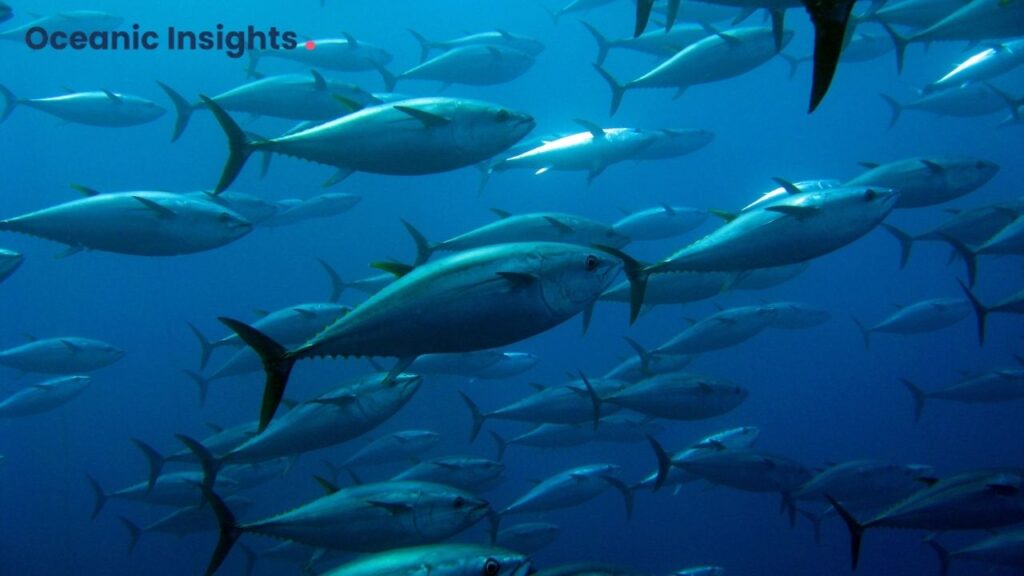
Unlike solitary predators, yellowfin tuna often hunt in coordinated groups, herding schools of smaller fish into tight “bait balls” before attacking. This teamwork makes them incredibly efficient hunters.
3.2 Diet & Prey Preferences
Their diet consists mainly of:
- Small fish (sardines, anchovies, mackerel)
- Squid & crustaceans
- Occasional deep-sea organisms
Their high metabolism requires them to eat frequently, sometimes consuming up to 25% of their body weight daily.
4. Reproduction & Life Cycle
4.1 Spawning Habits
Yellowfin tuna reach sexual maturity at 2-3 years old. Spawning occurs in warm tropical waters, where:
- Females release millions of eggs into the open ocean
- Males fertilize the eggs externally
- Eggs hatch within 24-48 hours
4.2 Growth & Lifespan
- Larvae: Feed on plankton until they grow large enough to hunt small fish.
- Juveniles: Form schools near floating debris for protection.
- Adults: Typically live 6-7 years, though some reach 10 years in ideal conditions.
5. Ecological Importance
5.1 Role in the Marine Food Web
As apex predators, yellowfin tuna help regulate populations of smaller fish and squid, maintaining balance in marine ecosystems. Their decline could lead to overpopulation of prey species, disrupting ocean health.
5.2 Indicator Species for Ocean Health
Because they are sensitive to water temperature, pollution, and overfishing, scientists use yellowfin tuna populations as an indicator of ocean ecosystem stability.
6. Threats & Conservation Challenges to Yellowfin Tuna
6.1 Overfishing: The Biggest Threat
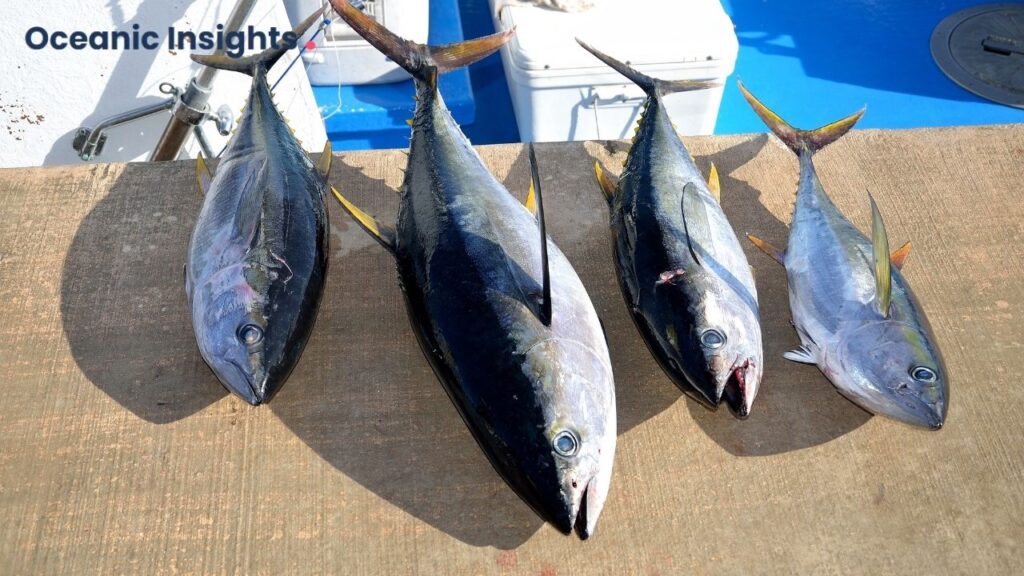
Industrial fishing fleets use purse seines, longlines, and fish aggregating devices (FADs) to catch yellowfin tuna in massive quantities. Some populations have declined by nearly 40% since the 1970s.
6.2 Bycatch & Habitat Destruction
- Dolphins, sea turtles, and sharks are often accidentally caught in tuna fisheries.
- Deep-sea trawling damages critical spawning habitats.
6.3 Climate Change Impacts
Rising ocean temperatures and shifting prey distributions force yellowfin tuna into new areas, increasing competition with other species.
7. Sustainable Fishing & How You Can Help
7.1 Choosing Sustainable Seafood
Look for certifications like:
- MSC (Marine Stewardship Council)
- Dolphin-Safe labels
- Pole-and-line caught tuna (a more selective fishing method)
7.2 Supporting Marine Conservation
- Advocate for fishing quotas
- Reduce plastic pollution (which harms marine life)
- Support organizations like WWF & Oceana
8. Culinary Significance: Why Chefs Love Yellowfin Tuna
8.1 Flavor & Texture Profile
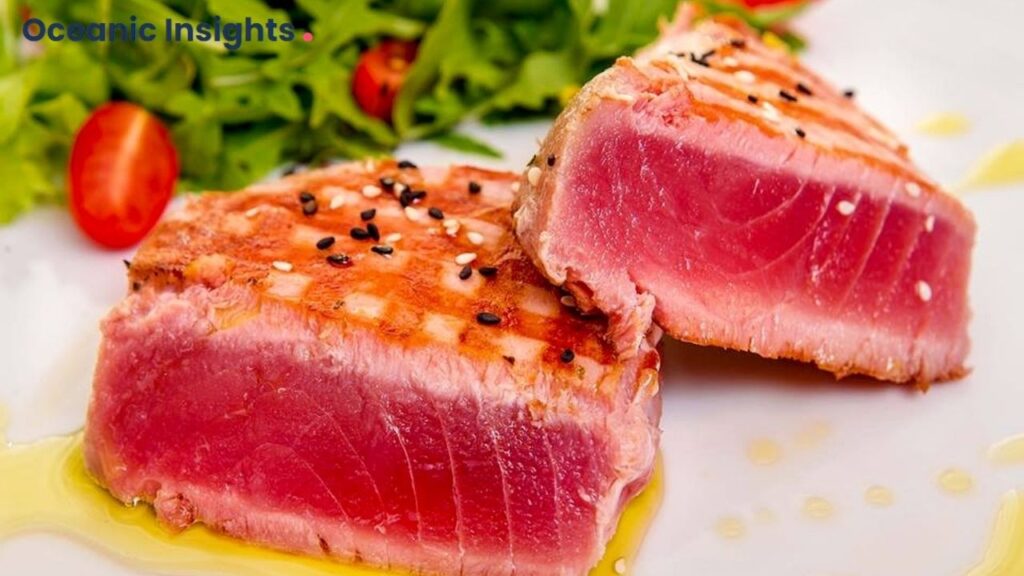
- Firm, meaty texture
- Mild, slightly sweet flavor
- High fat content (for a rich, buttery taste)
8.2 Popular Dishes
- Sushi & Sashimi (especially maguro in Japanese cuisine)
- Grilled or seared tuna steaks
- Tuna tartare & ceviche
8.3 Nutritional Benefits
- High in lean protein
- Rich in omega-3 fatty acids (great for heart health)
- Packed with vitamins B12, D, and selenium
9. Fun Facts & Records
🔹 Speed Demons: Can swim faster than a cheetah’s top speed (50 mph vs. 60 mph).
🔹 Deep Divers: Have been recorded at depths of 1,300 meters (4,265 feet).
🔹 Long-Distance Travelers: Some tagged tuna have migrated over 5,000 miles.
🔹 Record Catches: The largest yellowfin ever caught weighed 427 pounds (194 kg)!
10. The Future of Yellowfin Tuna
While yellowfin tuna populations are still relatively stable compared to critically endangered bluefin tuna, urgent action is needed to prevent further declines. Key steps include:
✅ Stricter international fishing regulations
✅ Expansion of marine protected areas (MPAs)
✅ Consumer awareness & sustainable choices
Conclusion: A Call to Protect the Yellowfin Tuna
The yellowfin tuna is more than just a fish—it’s a symbol of ocean vitality. From its lightning-fast hunting skills to its irreplaceable role in marine ecosystems, this species reminds us of the fragile balance of life beneath the waves.
Next time you enjoy a tuna steak or sushi roll, take a moment to appreciate the incredible journey of the yellowfin tuna—from the deep ocean to your plate.
Join the Conversation!
🌊 Did you learn something new? Let us know in the comments!
👍 Enjoyed this article? Share it with fellow ocean lovers!
🔔 Stay tuned for more Ocean Insights—subscribe for updates!
Together, let’s protect our oceans and the amazing creatures that call them home. 🌍💙
For more marine life stories, visit Ocean Insights! 🐟🌊
Leave a Reply