
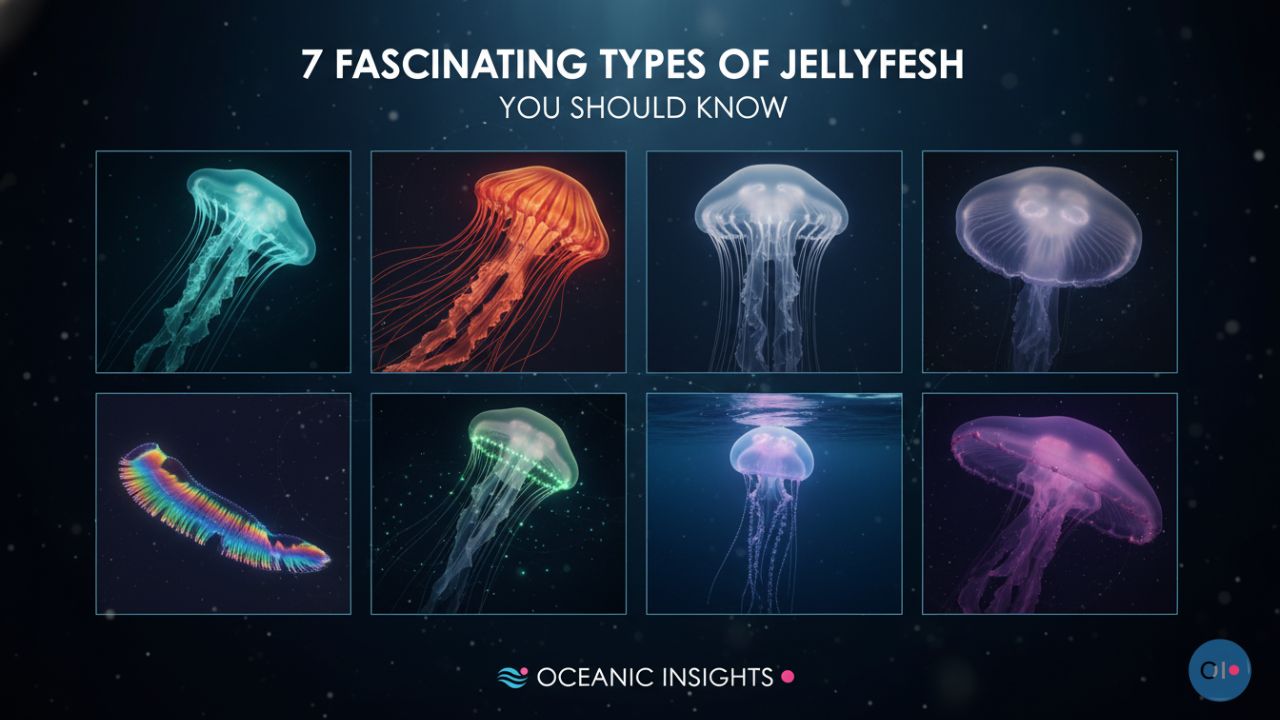
When you think of jellyfish, you might picture translucent, umbrella-shaped creatures drifting peacefully through the ocean. However, the world of jellyfish is far more diverse and extraordinary than most people realize. From immortal species that can reverse their aging process to venomous creatures capable of killing a human in minutes, the 7 fascinating types of jellyfish you should know represent some of the most remarkable organisms on our planet.
With over 2,000 identified species and potentially thousands more yet to be discovered, jellyfish (also called jellies or sea jellies) have existed for at least 500 million years predating dinosaurs, sharks, and trees. These ancient mariners belong to the phylum Cnidaria and have evolved incredible adaptations that allow them to thrive in virtually every ocean on Earth. Understanding different types of jellyfish not only reveals the extraordinary diversity of marine life but also highlights their important roles in ocean ecosystems and their surprising relevance to modern science and medicine.
Understanding Jellyfish: Ancient Ocean Dwellers
Before exploring specific types of jellyfish, it’s helpful to understand what makes these creatures so unique. Despite being called jellyfish, they’re not actually fish at all they’re invertebrates belonging to the phylum Cnidaria, which also includes coral and sea anemones.
Jellyfish bodies are composed of approximately 95% water, with the rest being mostly protein and very little solid matter. Their simple anatomy includes:
Basic Jellyfish Anatomy:
- Bell or umbrella: The dome-shaped body that pulsates for movement
- Tentacles: Armed with specialized stinging cells called nematocysts
- Oral arms: Modified structures around the mouth used for feeding
- Gastrovascular cavity: A simple stomach where digestion occurs
- No brain, heart, bones, or blood: Jellyfish operate with a simple nerve net
Most types of jellyfish reproduce through a complex life cycle involving both sexual and asexual reproduction, alternating between a polyp stage (attached to surfaces) and a free-swimming medusa stage (the familiar jellyfish form).
Now, let’s dive into seven fascinating types of jellyfish that showcase the incredible diversity within this ancient group of organisms.
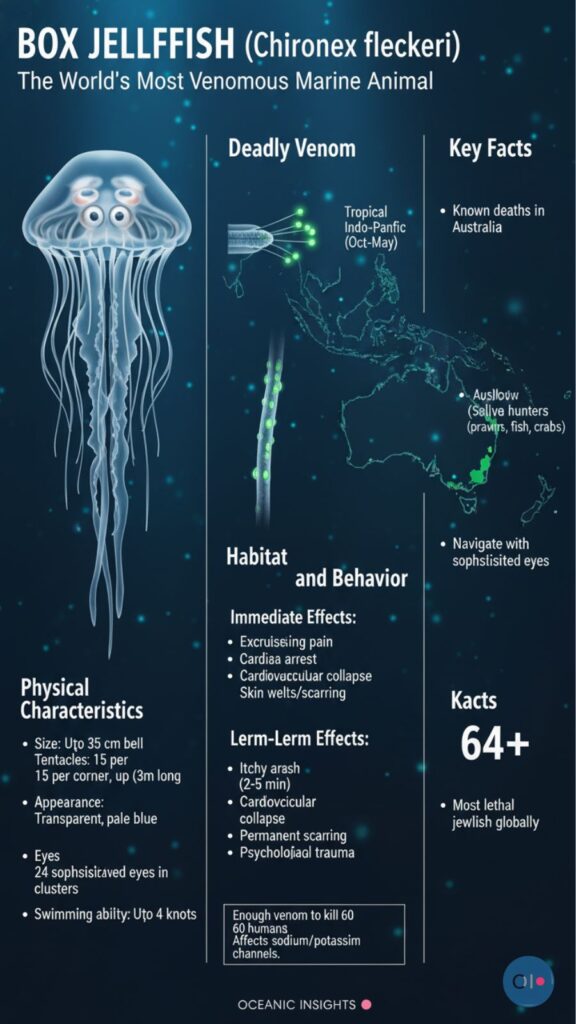
1. Box Jellyfish (Chironex fleckeri): The World’s Most Venomous Marine Animal
When discussing dangerous types of jellyfish, the box jellyfish stands in a terrifying category of its own. The Australian box jellyfish, Chironex fleckeri, has caused at least 64 known deaths in Australia and is considered one of the most lethal jellyfish in the world.
Physical Characteristics
Box jellyfish are named for their cube-shaped bell, which sets them apart from the typical dome-shaped types of jellyfish. Key identifying features include:
- Size: Bell can reach up to 35 cm (14 inches) in diameter
- Tentacles: Up to 15 tentacles trailing from each of the four corners of the bell, extending up to 3 meters (10 feet) long
- Appearance: Pale blue, virtually transparent bell with faint markings
- Eyes: Unlike most types of jellyfish, box jellyfish have 24 eyes arranged in clusters, some surprisingly sophisticated with lenses, corneas, and retinas
- Swimming ability: Can swim at speeds approaching four knots, unlike most jellyfish species that simply drift with currents
Deadly Venom
The tentacles are covered with millions of cnidocytes which release microscopic darts delivering extremely powerful venom, with enough venom in one animal to kill 60 adult humans. The venom’s effects are devastating:
Immediate Effects:
- Excruciating pain described as one of the most intense known to medical science
- Cardiac arrest can occur within two to five minutes after severe stings
- Rapid-acting cardiovascular collapse
- Skin welts and potential permanent scarring
Long-term Effects:
- Extreme itchy rash that can last weeks
- Permanent skin scarring in survivors
- Psychological trauma from the intense pain experience
The box jellyfish’s venom affects sodium and potassium channels in cells, causing hyperkalemia which leads to cardiovascular failure. Researchers have made progress developing antidotes, with a 2019 study identifying potential treatments that could be administered up to 15 minutes after exposure.
Habitat and Behavior
Box jellyfish inhabit tropical coastal waters of Australia and throughout the Indo-Pacific region, including Indonesia, the Philippines, and Southeast Asia. They’re most common from October through May in Australian waters, with nearly all encounters occurring in shallow water beaches.
Unlike passive drifters, box jellyfish are active hunters that prey on prawns, small fish, crabs, and shrimp. Their sophisticated eyes allow them to navigate around obstacles and actively pursue prey behaviors unusual among types of jellyfish.
2. Immortal Jellyfish (Turritopsis dohrnii): The Master of Biological Immortality
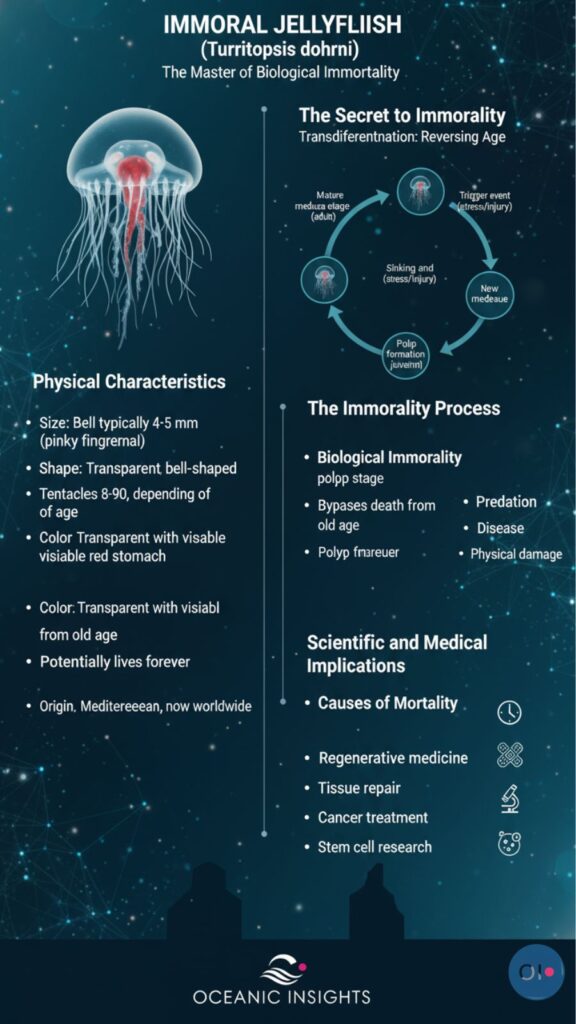
Among all types of jellyfish, perhaps none is more scientifically fascinating than Turritopsis dohrnii, commonly known as the immortal jellyfish. This tiny creature has unlocked a biological superpower that scientists are only beginning to understand: the ability to reverse its aging process and potentially live forever.
The Secret to Immortality
The immortal jellyfish possesses a remarkable ability called transdifferentiation the process where one type of cell transforms into a completely different type. When faced with stress, injury, starvation, or old age, this jellyfish can revert from its mature medusa stage back to its juvenile polyp stage, essentially aging backward.
The Immortality Process:
- Mature medusa stage: Adult jellyfish swimming freely
- Trigger event: Stress, injury, or aging signals
- Sinking and transformation: The bell transforms and settles to the seafloor
- Polyp formation: The jellyfish reverts to a polyp colony
- New medusae: The polyp produces new, genetically identical jellyfish
- Cycle repeats: The process can theoretically continue indefinitely
This ability essentially allows the immortal jellyfish to bypass death from old age, making it potentially biologically immortal. However, they can still die from predation, disease, or physical damage.
Physical Characteristics
The immortal jellyfish is surprisingly small and inconspicuous:
- Size: Bell diameter typically 4-5 mm (about the size of a pinky fingernail)
- Shape: Transparent, bell-shaped body
- Tentacles: Young jellyfish have 8 tentacles; mature specimens can have 80-90 tentacles
- Color: Transparent with visible red stomach
- Origin: First discovered in the Mediterranean Sea but now found worldwide
Scientific and Medical Implications
Researchers are intensely studying the immortal jellyfish to understand how its cells can de-differentiate and transform. This research could potentially lead to breakthroughs in:
- Regenerative medicine and tissue repair
- Understanding and potentially reversing aging processes
- Cancer treatment (as cancer involves abnormal cell differentiation)
- Stem cell research and applications
While Turritopsis dohrnii may be one of the smallest types of jellyfish, its biological capabilities make it one of the most important for scientific research.
3. Lion’s Mane Jellyfish (Cyanea capillata): The Largest Jellyfish on Earth
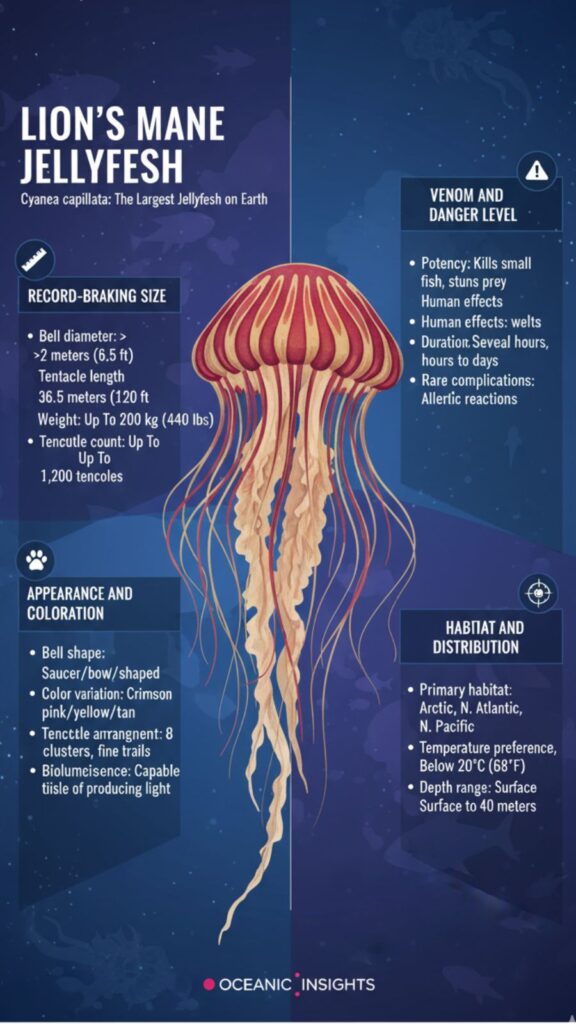
The lion’s mane jellyfish earns its place among remarkable types of jellyfish by being the longest known animal in the world. Named for its flowing mass of tentacles that resembles a lion’s mane, this Arctic giant is both beautiful and formidable.
Record-Breaking Size
The lion’s mane jellyfish holds the record for the longest known animal, surpassing even the blue whale in total length (though not in mass):
Size Specifications:
- Bell diameter: Can exceed 2 meters (6.5 feet) in diameter
- Tentacle length: The longest recorded specimen had tentacles extending 36.5 meters (120 feet)
- Weight: Large specimens can weigh up to 200 kg (440 pounds)
- Tentacle count: Can have up to 1,200 tentacles arranged in eight clusters
The size of lion’s mane jellyfish varies significantly by location. Specimens in colder Arctic waters grow much larger than those found in warmer southern waters, following a pattern common in marine organisms.
Appearance and Coloration
Among different types of jellyfish, the lion’s mane is easily recognizable by its distinctive features:
- Bell shape: Saucer or bowl-shaped with thick, domed center
- Color variation: Ranges from deep crimson in larger specimens to lighter pink, yellow, or tan in smaller individuals
- Tentacle arrangement: Eight lobes, each bearing numerous fine tentacles that trail behind
- Bioluminescence: Capable of producing light in dark waters
Venom and Danger Level
While not as lethal as box jellyfish, lion’s mane jellies possess painful stings:
- Potency: Venom strong enough to kill small fish and stun larger prey
- Human effects: Painful sting causing welts, rashes, and intense burning sensation
- Duration: Pain and irritation can last for several hours to days
- Rare complications: Severe allergic reactions possible in sensitive individuals
Even dead lion’s mane jellyfish can sting, as their nematocysts remain active for weeks after the animal dies.
Habitat and Distribution
Lion’s mane jellyfish are found throughout cold-water regions:
- Primary habitat: Arctic, northern Atlantic, and northern Pacific Oceans
- Temperature preference: Cold waters below 20°C (68°F)
- Depth range: Usually found in surface waters but can venture to depths of 40 meters
- Seasonal patterns: More commonly seen near shores during summer and early fall
These magnificent jellies play important ecological roles as both predators and prey. They consume small fish, other jellyfish, zooplankton, and tiny crustaceans, while serving as food for sea turtles, larger fish, and seabirds.
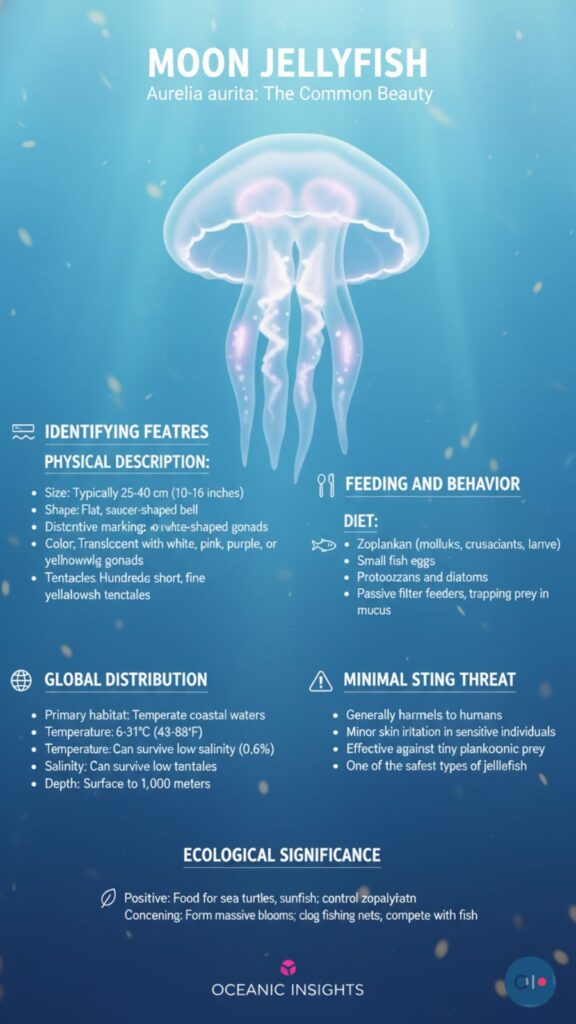
4. Moon Jellyfish (Aurelia aurita): The Common Beauty
The moon jellyfish is one of the most recognizable and widespread types of jellyfish found across the world’s oceans. Its delicate beauty and relatively harmless nature make it a favorite in public aquariums and a common sight for beachgoers worldwide.
Identifying Features
Moon jellyfish are easily identified by their characteristic appearance:
Physical Description:
- Size: Typically 25-40 cm (10-16 inches) in diameter, though can reach 40 cm
- Shape: Flat, saucer-shaped bell with smooth edges
- Distinctive marking: Four horseshoe-shaped gonads easily visible through the transparent bell
- Color: Almost entirely translucent with gonads appearing white, pink, purple, or yellowish
- Tentacles: Hundreds of short, fine tentacles fringing the bell edge
The four horseshoe-shaped reproductive organs (gonads) arranged like a four-leaf clover in the center of the bell make moon jellyfish instantly recognizable among types of jellyfish.
Global Distribution
Moon jellyfish have a cosmopolitan distribution found in three of the four oceans (all but the Arctic), including coastal waters of nearly all of North and South America, Eurasia, southern Greenland, and likely all coasts of Australia. This makes them among the most widespread types of jellyfish on the planet.
Habitat Preferences:
- Water temperature: Can survive in temperatures ranging from 6-31°C (43-88°F), with optimal temperatures of 9-19°C (48-66°F)
- Salinity tolerance: Can survive in water with salinity as low as 0.6%, allowing them to inhabit estuaries and bays
- Depth: Found from surface waters to depths of 200-1,000 meters
- Environment: Prefer temperate coastal waters with consistent currents
Feeding and Behavior
Moon jellyfish are carnivorous filter feeders with an interesting hunting strategy:
Diet:
- Zooplankton including mollusks, crustaceans, and larvae
- Small fish eggs
- Protozoans and diatoms
- Other tiny planktonic organisms
Rather than actively hunting, moon jellyfish use a more passive approach. Their bell and tentacles are covered with a layer of mucus that traps small prey. Cilia (tiny hair-like structures) then transport the food particles to the bell margin, where they’re moved to the oral arms and eventually to the mouth.
Minimal Sting Threat
Moon jellyfish differ from many types of jellyfish in that they lack long, potent stinging tentacles, instead having hundreds of short, fine tentacles. Their sting is very mild:
- Generally harmless to humans
- May cause minor skin irritation in sensitive individuals
- Primarily effective against tiny planktonic prey
- One of the safest types of jellyfish to encounter
Ecological Significance
Moon jellyfish play important roles in marine ecosystems but can also cause problems:
Positive Impacts:
- Provide food for leatherback sea turtles, sunfish, and other predators
- Help control zooplankton populations
- Serve as hosts for small crustaceans and fish larvae
Concerning Trends:
- Form massive blooms that can number millions of individuals
- Blooms can clog fishing nets and interfere with fishing operations
- Compete with fish for zooplankton food sources
- Can be drawn into power plant cooling systems, causing shutdowns
Interestingly, recent research has revealed that moon jellyfish are capable of life cycle reversal similar to the immortal jellyfish, allowing them to revert to earlier life stages under certain conditions.
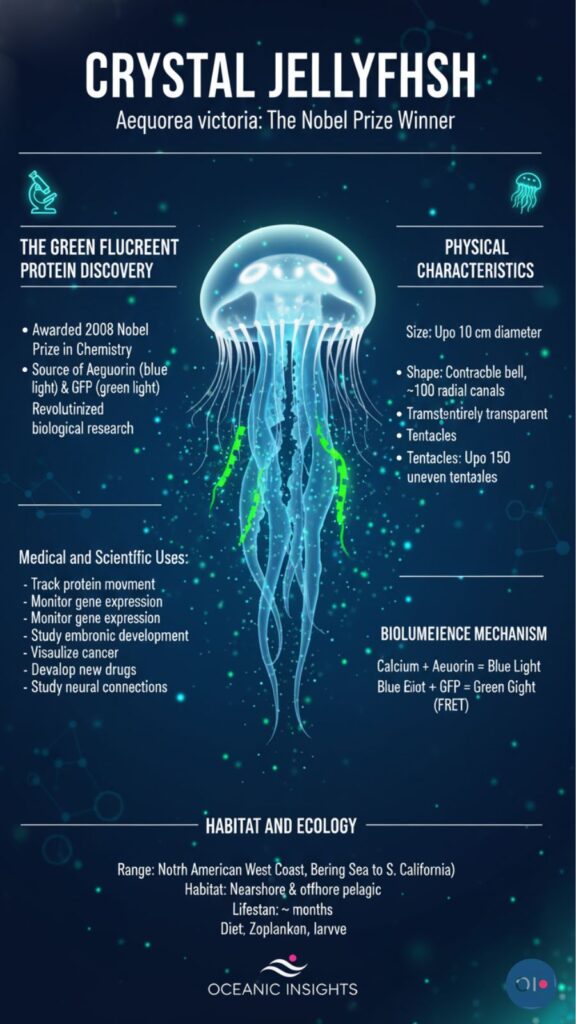
5. Crystal Jellyfish (Aequorea victoria): The Nobel Prize Winner
The crystal jellyfish might be one of the lesser-known types of jellyfish to the general public, but in the scientific community, it’s a superstar. This unassuming jellyfish from the Pacific Northwest has revolutionized biological research and earned its discoverers a Nobel Prize.
The Green Fluorescent Protein Discovery
Aequorea victoria is best known as the source of aequorin (a photoprotein) and green fluorescent protein (GFP), with their discoverers Osamu Shimomura and colleagues winning the 2008 Nobel Prize in Chemistry for their work on GFP.
The story began in 1961 when Shimomura started collecting these jellyfish at Friday Harbor Laboratories in Washington State. After processing thousands of specimens, he isolated two proteins:
Aequorin: A protein that produces blue bioluminescence when it interacts with calcium ions
Green Fluorescent Protein (GFP): A protein that fluoresces bright green when exposed to blue light
Revolutionary Scientific Applications
GFP has become one of the most important tools in modern biological research. Scientists can attach the GFP gene to other genes, creating “tagged” proteins that glow green under UV or blue light. This allows researchers to:
Medical and Scientific Uses:
- Track protein movement within living cells
- Monitor gene expression in real-time
- Study embryonic development and cell differentiation
- Visualize cancer cell metastasis
- Observe how diseases progress at the cellular level
- Develop new drugs by watching their effects on cells
- Study neural connections in the brain
The impact of GFP on biological and medical research cannot be overstated. It has enabled discoveries that would have been impossible before, making it one of the most valuable contributions any species has made to human knowledge.
Physical Characteristics
The crystal jellyfish itself is a beautiful, delicate creature:
Appearance:
- Size: Bell diameter can reach up to 10 cm (4 inches), with larger specimens up to 25 cm
- Shape: Highly contractile bell with up to 100 radial canals extending to the bell margin
- Transparency: Almost entirely transparent and colorless, sometimes difficult to see in water
- Tentacles: Up to 150 uneven tentacles in fully-grown specimens
- Bioluminescence: Produces flashes of blue-green light when disturbed
Bioluminescence Mechanism
The crystal jellyfish produces flashes of blue light through quick release of calcium which interacts with aequorin, with the blue light then transduced to green by GFP through Förster resonance energy transfer (FRET).
The bioluminescent light appears as green flashes around the rim of the bell when the jellyfish is disturbed or bumped. This may serve to startle predators or attract larger predators that might eat the jellyfish’s attackers.
Habitat and Ecology
Crystal jellyfish are found along the North American west coast:
- Range: From the Bering Sea to southern California
- Abundance: Particularly common in Puget Sound, Washington
- Habitat: Nearshore and offshore pelagic waters
- Lifespan: Approximately 6 months
- Diet: Soft-bodied organisms, copepods, crab larvae, and other small zooplankton
Among all types of jellyfish, the crystal jellyfish stands out not for being the largest, most venomous, or most widespread, but for its immeasurable contribution to human understanding of biology and disease.
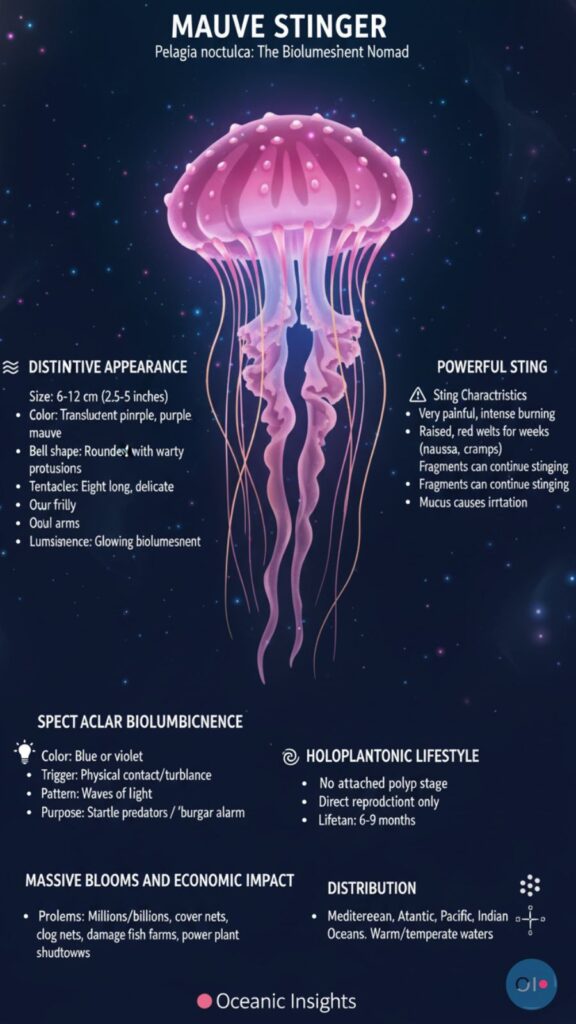
6. Mauve Stinger (Pelagia noctiluca): The Bioluminescent Nomad
The mauve stinger represents types of jellyfish that spend their entire lives in the open ocean, never attaching as polyps like many other jellyfish species. This beautiful but painful jellyfish is known for its striking bioluminescence and its tendency to form massive swarms that can disrupt beaches and fisheries.
Distinctive Appearance
The mauve stinger is one of the most colorful types of jellyfish:
Physical Features:
- Size: Bell diameter typically 6-12 cm (2.5-5 inches)
- Color: Beautiful translucent pink, purple, or mauve coloration
- Bell shape: Rounded dome with warty protrusions giving it a bumpy texture
- Tentacles: Eight long, delicate tentacles trailing from the bell margin
- Oral arms: Four frilly oral arms surrounding the mouth
- Luminescence: Produces glowing bioluminescent displays when disturbed
The warty bumps on the bell surface contain particularly high concentrations of stinging cells, contributing to the jellyfish’s defensive capabilities.
Powerful Sting
Despite its beauty, the mauve stinger packs a painful punch that makes it one of the more problematic types of jellyfish for swimmers:
Sting Characteristics:
- Very painful sting that causes intense burning sensation
- Produces raised, red welts that can persist for weeks
- Can cause systemic symptoms including nausea and muscle cramps
- Fragments of tentacles can continue stinging even when separated from the jellyfish
- Mucus trails left by the jellyfish can also cause skin irritation
The scientific name “Pelagia noctiluca” translates to “pelagic night-light,” referring to both its open-ocean lifestyle and its bioluminescent abilities.
Spectacular Bioluminescence
The mauve stinger is among the most bioluminescent types of jellyfish. When disturbed, it produces stunning displays of light:
- Color: Emits blue or violet bioluminescent light
- Trigger: Physical contact or water turbulence stimulates light production
- Pattern: Creates waves of light that ripple across the bell
- Purpose: Likely serves as a defense mechanism to startle predators or as a “burglar alarm” to attract larger predators
On dark nights, swimming through waters with mauve stingers can create a magical (though potentially painful) experience as thousands of jellyfish light up in response to movement.
Holoplanktonic Lifestyle
Unlike most types of jellyfish that have a benthic polyp stage, mauve stingers are holoplanktonic spending their entire lives drifting in open water:
Life Cycle:
- No attached polyp stage
- Direct development from egg to small medusa
- Sexual reproduction only
- Reaches sexual maturity at about 1 cm diameter
- Lifespan typically 6-9 months
Massive Blooms and Economic Impact
Mauve stingers are notorious for forming enormous swarms:
Bloom Characteristics:
- Can number in the millions or billions of individuals
- Cover areas of hundreds of square kilometers
- Occur unpredictably, influenced by ocean currents and temperature
- Tend to be more common in warmer months
Problems Caused:
- Force beach closures due to high sting risk
- Clog fishing nets, ruining catches
- Damage aquaculture facilities by stinging and killing farmed fish
- Interfere with power plant cooling systems
- Block tourist activities and reduce coastal tourism revenue
In 2007, a massive bloom of mauve stingers in Northern Ireland wiped out an entire salmon farm, killing more than 100,000 fish and causing millions of dollars in damage.
Distribution
Mauve stingers are found worldwide in warm and temperate waters:
- Mediterranean Sea (very common)
- Atlantic Ocean
- Pacific Ocean
- Indian Ocean
- Prefer offshore waters but are often driven to coasts by winds and currents
Climate change may be increasing the frequency and intensity of mauve stinger blooms, as warmer ocean temperatures appear to favor their reproduction and survival.
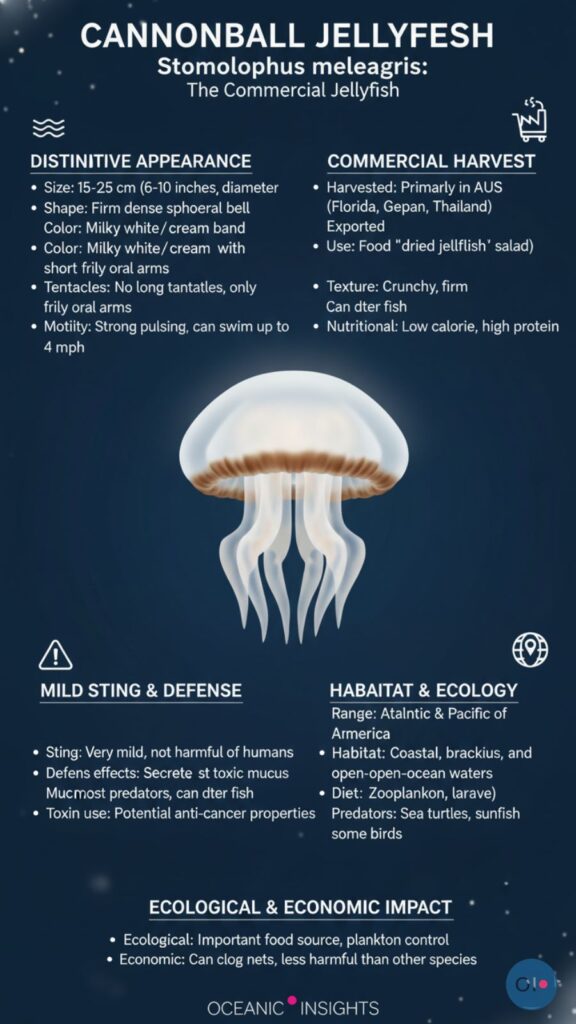
7. Cannonball Jellyfish (Stomolophus meleagris): The Commercial Jellyfish
While most types of jellyfish are avoided or feared, the cannonball jellyfish represents a different relationship between humans and jellies are commercially harvested for food and other products, making it economically important in several countries.
Physical Characteristics
The cannonball jellyfish gets its name from its distinctive appearance:
Identifying Features:
- Size: Bell diameter typically 15-25 cm (6-10 inches), can reach 45 cm
- Shape: Thick, dome-shaped bell resembling a cannonball
- Color: Whitish or cream-colored, sometimes with brown or purple edge coloring
- Weight: Much heavier and more solid than most jellyfish, can weigh several pounds
- Tentacles: Very short tentacles or lacks visible tentacles entirely
- Oral arms: Thick, frilly oral arms used for feeding
The stocky, compact appearance makes cannonball jellyfish easy to distinguish from other types of jellyfish.
Mild Sting and Symbiotic Relationships
Cannonball jellyfish are among the least dangerous types of jellyfish to humans:
Sting Profile:
- Generally harmless to humans
- Sting is very mild if it occurs at all
- Primarily affects only small prey
- Skin irritation possible but uncommon
Interesting Symbiosis:
- Often hosts small crabs (Libinia dubia) that live on and around the bell
- The crabs gain protection from predators
- Jellyfish may benefit from crabs eating parasites
- Juvenile fish sometimes swim among the oral arms for protection
Commercial Harvesting
Cannonball jellyfish are harvested commercially, particularly in the southeastern United States, Mexico, and parts of Asia:
Uses:
- Food: Popular in Asian cuisine, especially in China and Japan
- Collagen extraction: Used in cosmetics and medical applications
- Traditional medicine: Used in some Asian medical practices
- Pet food: Processed into meal for aquaculture feeds
Harvest Process:
- Caught using specialized nets during seasonal aggregations
- Processed quickly to prevent decomposition
- Salted and dried for preservation
- Cleaned and packaged for export
The fishery for cannonball jellyfish in the United States (primarily Georgia) has become economically significant, with millions of pounds harvested annually for export to Asian markets.
Habitat and Behavior
Cannonball jellyfish are found in warm coastal waters:
Distribution:
- Western Atlantic from Brazil to New England
- Eastern Pacific from California to Ecuador
- Gulf of Mexico (very common)
- Prefer shallow coastal and estuarine waters
Behavioral Patterns:
- Form large aggregations, especially during spawning season
- Strong swimmers compared to many types of jellyfish
- Feed on zooplankton and small organisms filtered from the water
- Can withstand a wide range of salinities
Ecological Role
Cannonball jellyfish play important ecological roles:
- Consume large quantities of zooplankton, affecting food web dynamics
- Provide food for sea turtles (especially leatherbacks)
- Serve as hosts for several commensal species
- Their blooms can indicate oceanographic conditions and climate patterns
Some researchers consider cannonball jellyfish an indicator species, with their abundance potentially signaling changes in ocean conditions, nutrient availability, or ecosystem health.
The Importance of Understanding Different Types of Jellyfish
Learning about these seven fascinating types of jellyfish reveals the incredible diversity within this ancient group of organisms. From deadly venomous species to Nobel Prize-winning scientific tools, from immortal beings to commercially harvested food sources, jellyfish demonstrate nature’s creativity and the complex connections between marine life and human society.
Conservation and Climate Considerations
Many types of jellyfish populations are increasing globally, a phenomenon linked to several factors:
Factors Contributing to Jellyfish Blooms:
- Ocean warming due to climate change
- Overfishing of jellyfish predators (turtles, tuna, swordfish)
- Nutrient pollution creating favorable conditions
- Reduction of competing fish populations
- Increased ocean acidification
While jellyfish blooms can cause problems for tourism, fishing, and coastal industries, jellyfish themselves aren’t inherently “bad.” They’re simply responding to changing ocean conditions that humans have largely created.
Scientific and Medical Value
Different types of jellyfish continue to provide valuable insights and tools for science:
- Biomedical research: GFP and related proteins remain essential tools
- Aging research: Studies of immortal jellyfish may unlock secrets of longevity
- Venom research: Jellyfish toxins are being studied for potential therapeutic applications
- Neuroscience: Simple nervous systems provide models for understanding neural function
- Materials science: Jellyfish collagen has applications in tissue engineering
Safety Tips for Encountering Jellyfish
When visiting beaches where these types of jellyfish might be present:
Prevention:
- Wear protective clothing like wetsuits or stinger suits
- Avoid swimming in areas with jellyfish warnings
- Don’t touch jellyfish, even if they appear dead
- Be cautious of water that looks cloudy or contains fragments
If Stung:
- Exit the water immediately
- Remove tentacles with tweezers or a card edge (don’t use bare hands)
- Rinse with vinegar for box jellyfish (but not for other types)
- Rinse with seawater (not fresh water) for most other stings
- Seek medical attention for severe reactions or box jellyfish stings
- Don’t apply ice, urine, or other folk remedies without medical guidance
Conclusion
The seven fascinating types of jellyfish explored in this article the deadly box jellyfish, immortal jellyfish, giant lion’s mane, common moon jellyfish, Nobel Prize-winning crystal jellyfish, bioluminescent mauve stinger, and commercially valuable cannonball jellyfish represent only a tiny fraction of jellyfish diversity. Yet each one demonstrates unique adaptations and plays specific roles in ocean ecosystems.
From the box jellyfish’s lethal venom to the immortal jellyfish’s age-reversing abilities, from the lion’s mane’s record-breaking size to the crystal jellyfish’s revolutionary contribution to science, these creatures challenge our understanding of life’s possibilities. Whether drifting through tropical waters or cold Arctic seas, actively hunting or passively filtering, these types of jellyfish have survived for hundreds of millions of years by perfecting their simple yet effective body plans.
As ocean conditions continue to change due to human activities, understanding these types of jellyfish becomes increasingly important. They serve as indicators of ocean health, contributors to marine food webs, and sources of scientific knowledge that may help solve human health challenges. By appreciating the diversity, ecology, and significance of different types of jellyfish, we gain deeper insight into the complexity and wonder of our ocean planet and perhaps develop greater motivation to protect these ancient mariners and the seas they call home.
Leave a Reply