
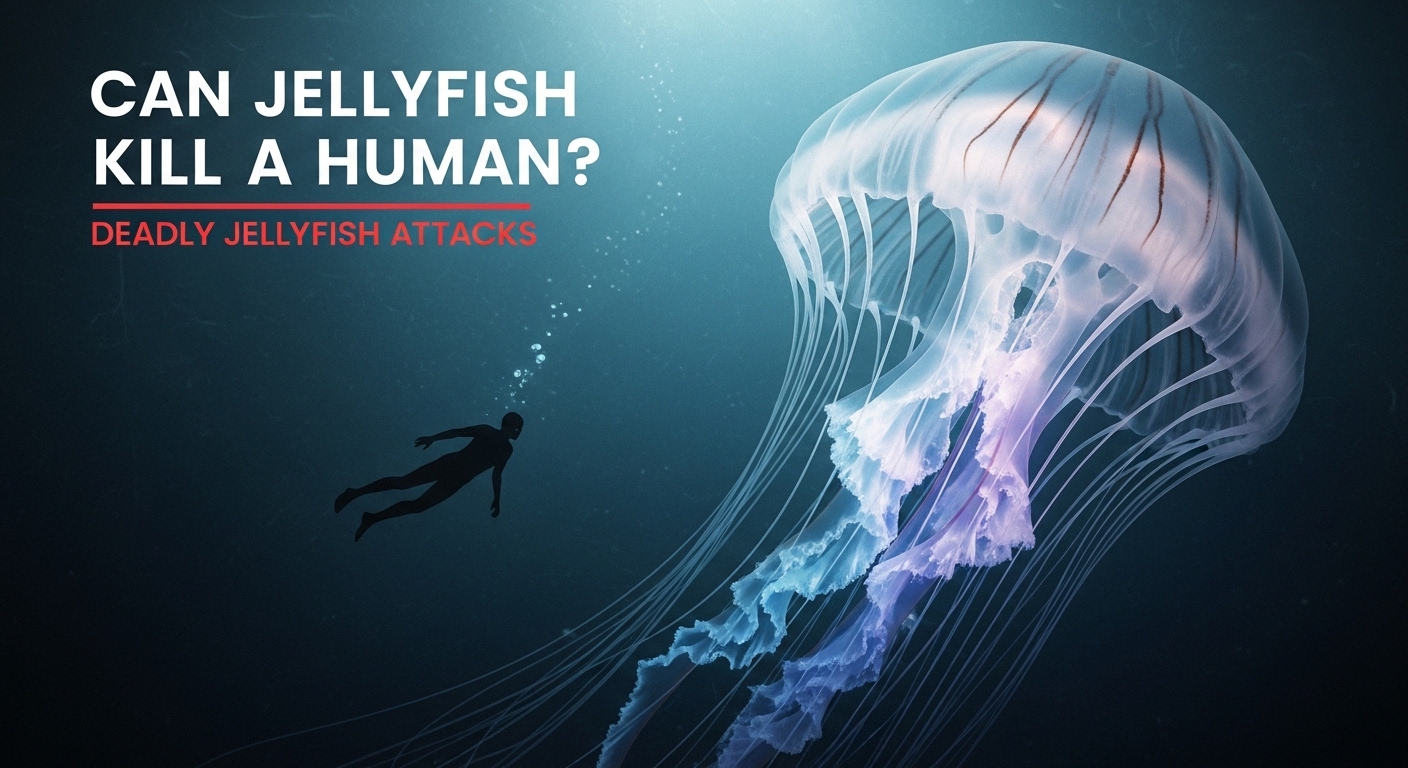
The question “can jellyfish kill a human?” might seem like something from a beach-goer’s worst nightmare, but the answer is a sobering reality that claims approximately 100 lives each year—and potentially many more that go unreported. While most jellyfish species pose no serious threat to humans beyond painful stings and temporary discomfort, certain species possess venom so potent that they rank among the most dangerous animals on Earth.
Understanding whether jellyfish can kill a human requires looking beyond the common moon jellies and harmless species that wash up on beaches worldwide. The deadliest jellyfish attacks come from a specific group called box jellyfish, whose venom can stop a human heart within minutes. As ocean temperatures rise and jellyfish populations increase globally, encounters between humans and these deadly marine creatures are becoming more frequent, making it crucial to understand the real dangers they pose and how to respond if stung.
The Deadly Reality: Jellyfish Kill More People Than Sharks
Can jellyfish kill a human? The statistics provide a startling answer. Jellyfish kill more people than sharks, sea snakes, and stingrays combined, with approximately 100 people killed each year by lethal box jellyfish stings, though the exact number is unknown and may be significantly higher.
This death toll exceeds that of shark attacks, which average only about 10 human fatalities per year worldwide. Yet jellyfish receive far less public attention despite posing a much greater statistical threat to swimmers and beachgoers.
Why Jellyfish Deaths Are Underreported:
- Many deaths occur in developing countries without comprehensive death certificate systems
- Victims often die in remote coastal areas far from medical facilities
- In the Philippines, an estimated 20-40 people die annually from box jellyfish stings, probably owing to limited access to medical facilities and antivenom
- Some researchers estimate the true toll could be 500 people per year in the Philippines alone
- Deaths may be misattributed to drowning rather than envenomation
- Local communities sometimes don’t report incidents to authorities
The question of can jellyfish kill a human becomes even more concerning when we consider that annual estimates indicate jellyfish are responsible for approximately 150 million stings worldwide. While the vast majority of these stings are not fatal, they represent an enormous public health burden affecting coastal communities and tourism industries globally.
The Most Deadly Jellyfish Species
When examining whether can jellyfish kill a human, it’s essential to understand that lethality varies dramatically by species. Of the approximately 4,000 jellyfish species worldwide, only a handful pose serious threats to human life.
Box Jellyfish (Chironex fleckeri): The Most Lethal
The Australian box jellyfish, scientifically known as Chironex fleckeri, holds the grim distinction of being the world’s most venomous marine animal. C. fleckeri has caused at least 79 deaths since the first report in 1883, making it responsible for more human fatalities than any other jellyfish species.
Physical Characteristics:
- Cube-shaped transparent bell up to 35 cm (14 inches) in diameter
- Up to 15 tentacles extending from each of the four corners of the bell
- Tentacles can reach 3 meters (10 feet) in length
- Pale blue, nearly invisible in water
- 24 eyes arranged in clusters—remarkably sophisticated for an invertebrate
Deadly Venom Profile:
- Contains enough venom to kill 60 adult humans
- Cardiac arrest can occur quickly after severe stings, within just two minutes
- Venom attacks the heart, nervous system, and skin cells simultaneously
- Creates pores in cell membranes, destroying red blood cells (hemolysis)
- Causes hyperkalemia (elevated blood potassium) leading to cardiovascular failure
Geographic Distribution:
- Tropical coastal waters of northern Australia
- Philippines, Thailand, Indonesia, and throughout the Indo-Pacific
- Most common from October through May in Australian waters
- Predominantly found in shallow coastal waters and estuaries
The pain from a box jellyfish sting has been described as feeling like being branded with a red-hot iron. Survivors report that the agony is so intense it can cause shock, potentially leading to drowning or heart failure even before the venom’s full effects manifest.
Irukandji Jellyfish: Tiny but Terrifying
While box jellyfish get the most attention, another group of deadly species deserves equal concern. Irukandji jellyfish are extremely venomous and are both one of the smallest and most venomous jellyfish in the world, with an adult size of about a cubic centimeter.
Unique Characteristics:
- Bell diameter typically 5-25 millimeters (thumbnail-sized or smaller)
- Four tentacles ranging from a few centimeters to 1 meter in length
- Unlike most jellyfish which have stingers only on tentacles, Irukandji also have stingers on their bell
- Nearly impossible to see in water due to small size and transparency
- Can fire stingers from the tips of their tentacles
Irukandji Syndrome:
The condition caused by Irukandji stings is so distinctive it has its own medical name: Irukandji syndrome. Symptoms include:
- Delayed onset of 5-120 minutes (30 minutes on average) with symptoms lasting from hours to weeks
- Severe lower back pain and muscle cramps
- Excruciating abdominal pain
- Nausea and vomiting
- Profuse sweating
- Difficulty breathing
- Hypertension (dangerous spike in blood pressure)
- Sense of impending doom (psychological symptom)
- Potential heart failure in severe cases
At least two deaths in Australia have been attributed to thumbnail-sized Irukandji box jellyfish, and when properly treated a single sting is normally not fatal, but two people in Australia are confirmed to have died from Irukandji stings in 2002. They are blamed for killing 5 tourists during a 3-month period in Australia with delayed onset and highly visible distress.
Other Dangerous Species
Chiropsalmus quadrumanus:
- Found in Gulf of Mexico and Caribbean waters
- In 1990, a 4-year-old child died after being stung by Chiropsalmus quadrumanus at Galveston Island, Texas
- Represents the most dangerous jellyfish species in U.S. waters
Chironex yamaguchii:
- Recently discovered species in Japanese waters
- May be equally dangerous to C. fleckeri
- Has been implicated in several deaths in Japan
- Biology and venom composition still being studied
Portuguese Man-of-War (Physalia physalis):
- Technically not a true jellyfish but a siphonophore (colonial organism)
- Only two deaths have been recorded in all the Mediterranean related to Portuguese Man o’war stings
- Can cause severe pain, welts, and rarely anaphylactic reactions
- More dangerous to those with allergies or underlying health conditions
How Jellyfish Venom Works: The Science of the Sting
Understanding can jellyfish kill a human requires knowledge of how jellyfish venom attacks the human body at a cellular level. The mechanism is both fascinating and terrifying.
The Nematocyst: Nature’s Microscopic Harpoon
Jellyfish tentacles are covered with specialized cells called nematocysts—spring-loaded capsules that contain microscopic harpoons. When triggered, a large concentration of calcium passes over the jellyfish’s plasma membrane, leading to increased pressure inside the nematocyst that causes threads to uncoil and spring out like tiny darts, firing venom into an unsuspecting victim.
This process happens at extraordinary speeds—nematocysts can fire microscopic harpoons at speeds of more than 60 kilometers per hour. The entire discharge takes only a fraction of a second, making it one of the fastest cellular processes in nature.
Key Facts About Nematocysts:
- Each jellyfish can have millions of nematocysts on its tentacles
- Nematocysts can fire their venom even when unattached from the jellyfish
- Tentacle fragments on the beach can remain dangerous for days or weeks
- Each nematocyst can only fire once, but one touch can trigger thousands simultaneously
- The trigger mechanism responds to chemicals found on human skin
Venom Composition and Effects
Box jellyfish venom is a complex cocktail of toxins that attack multiple body systems simultaneously. Research has identified over 250 different proteins in the venom, with several playing key roles in its lethality.
Primary Toxic Components:
CqTx Toxin:
- The CqTx protein creates pores in the membranes of cells which results in the destruction of red blood cells, known as hemolysis
- Unique to the most dangerous box jellyfish species
- Causes rapid leakage of potassium ions from damaged cells
Porins (Pore-Forming Proteins):
- Puncture cell membranes throughout the body
- Particularly devastating to red blood cells and cardiac tissue
- Cause rapid release of potassium leading to hyperkalemia
Cardiotoxins:
- Directly attack heart muscle cells
- Disrupt electrical rhythms that keep the heart beating
- Can cause cardiac arrest within minutes of envenomation
Neurotoxins:
- Attack the nervous system
- Contribute to the intense pain experienced by victims
- May impair breathing and other autonomic functions
Dermatonecrotic Toxins:
- Destroy skin tissue on contact
- Create the characteristic whip-like welts and scars
- Damaged tissue can take months to heal completely
The Fatal Cascade
When a person suffers a severe box jellyfish sting, multiple toxic effects occur simultaneously:
- Immediate Phase (0-2 minutes):
- Nematocysts fire, injecting venom into skin
- Intense pain begins instantly
- Venom enters bloodstream rapidly
- Acute Phase (2-15 minutes):
- Red blood cells begin rupturing, releasing potassium
- Potassium levels spike in the blood (hyperkalemia)
- Heart rhythm becomes disrupted
- Blood pressure may spike or drop dramatically
- Critical Phase (5-30 minutes):
- Cardiac arrest can occur quickly, even a miniscule amount of jellyfish venom can cause the heart to seize up and stop
- Respiratory distress as chest muscles affected
- Victim may lose consciousness
- Without immediate treatment, death can occur
- Recovery Phase (survivors):
- Intense pain can persist for hours to weeks
- Skin scarring that may be permanent
- Psychological trauma from the experience
- Potential long-term cardiovascular effects
Geographic Hotspots for Deadly Jellyfish Encounters
Can jellyfish kill a human? The answer depends significantly on where you’re swimming. Certain regions of the world experience far higher rates of deadly jellyfish encounters than others.
Australia: The Epicenter of Box Jellyfish Danger
Australia’s northern coastline represents the highest concentration of deadly box jellyfish anywhere on Earth. The warm tropical waters from October through May become hunting grounds for these lethal creatures.
High-Risk Australian Areas:
- Queensland coast (particularly Cape York)
- Northern Territory beaches
- Western Australia’s northern coastline
- Waters around Darwin
- Great Barrier Reef region
While most recent deaths in Australia have been in children, which is linked to their smaller body mass, in February 2021 a 17-year-old boy died about 10 days after being stung while swimming at a beach on Queensland’s western Cape York, with the previous fatality in 2007. In February 2022, a 14-year old died, demonstrating that despite increased awareness and prevention measures, these deadly encounters continue.
Southeast Asia: High Risk, Low Reporting
The Philippines, Thailand, Malaysia, and Indonesia experience significant numbers of deadly jellyfish encounters, but comprehensive statistics remain elusive due to limited reporting infrastructure.
Thailand: There were seven fatal box jellyfish cases in Thailand during the period 1999-2015, with six out of seven occurring on the islands of Pha-ngan and Samui, the highest incidence of jellyfish related deaths in Thailand.
The islands of Koh Samui and Koh Pha-ngan have become particular danger zones. Despite recent deaths, many people do not believe box jellyfish can kill humans and many people dismiss the problem as insignificant. This dangerous misconception has slowed implementation of prevention measures, putting tourists at continued risk.
The Philippines: The Philippines may have the highest unreported death toll from jellyfish in the world. While official figures cite 20-40 annual deaths, researchers believe the true number is far higher. In almost every coastal community researchers have visited, locals show scars from stings and recall deaths of friends and family from jellyfish encounters.
Other Risk Areas
Hawaii:
- Multiple box jellyfish species present
- Box jellyfish numbers peak approximately seven to ten days after a full moon when they come near shore to spawn
- Beaches sometimes closed when influxes are severe
- Warning systems in place at popular beaches
Caribbean and Gulf of Mexico:
- Chiropsalmus quadrumanus poses the primary threat
- Less frequent than Indo-Pacific species but still dangerous
- Warmer months see increased encounters
- Florida, Texas, and Caribbean islands most affected
Expanding Ranges: Climate change and warming oceans are expanding the geographic ranges of dangerous jellyfish species. Deadly box jellyfish have been found in areas where they were previously unknown or rare, including occasional appearances in temperate waters that would have been too cold for them in the past.
Real Deadly Jellyfish Attack Cases
The question can jellyfish kill a human becomes viscerally real when examining documented cases of fatal encounters. These stories highlight both the danger these creatures pose and the importance of rapid response.
Miraculous Survival: The Case of Rachael Shardlow
In December, Rachael Shardlow was stung by a box jellyfish in Australia, and after being pulled from the water with tentacles still wrapped around her legs, she amazingly lived through the attack, baffling doctors and marine biologists.
The 10-year-old girl had been swimming in a river in Queensland when she encountered the deadly jellyfish. By the time lifeguards reached her, tentacles covered her legs, and she was in cardiac arrest. First responders immediately applied vinegar and performed CPR. Against all odds, Shardlow survived despite receiving what medical experts estimated was a potentially lethal dose of venom.
Her case demonstrates several critical points:
- Immediate application of vinegar can help neutralize unfired nematocysts
- Rapid CPR can save victims even after cardiac arrest
- Children are particularly vulnerable due to smaller body mass
- Survival is possible even from severe envenomation with proper treatment
Fatal Encounters in Thailand
On July 31st and September 12th 2015, severe cases occurred on the island of Samui, including one fatal case. These incidents highlighted how even popular tourist beaches can harbor deadly jellyfish, often without warning systems in place.
In one case, a victim had fresh water poured on wounds and ice packs applied—treatments now known to be harmful. Application of fresh water and ice cause greater firing of nematocysts, hence these treatments are contraindicated for first aid for box jellyfish stings. This fatal case underscores how misinformation about treatment can turn a survivable sting into a deadly one.
The Ongoing Philippine Tragedy
While comprehensive case studies from the Philippines are limited, researchers documenting jellyfish encounters in coastal communities have found evidence of a far larger problem than official statistics suggest. Many victims die in remote areas without medical attention, and their deaths are never officially recorded as jellyfish envenomation.
Prince Gabriel, a young boy who died on a Philippine beach, represented the second child killed at the same location within a year. His death spread rapidly on social media, finally drawing attention to a problem that coastal communities had been living with for generations.
Can You Survive a Deadly Jellyfish Attack?
The answer to can jellyfish kill a human isn’t just about whether the venom is lethal—it’s also about whether treatment reaches the victim in time. Survival often depends on several critical factors.
Factors Determining Survival
Amount of Venom Injected:
- Larger jellyfish are generally more dangerous than smaller ones because they harbor more cnidocysts
- Contact with multiple tentacles increases venom dose
- Duration of contact affects total envenomation
- Most encounters with C. fleckeri appear to result only in mild envenoming
Victim’s Size and Health:
- Children are at significantly higher risk due to smaller body mass
- The same amount of venom has more severe effects in smaller bodies
- Pre-existing heart conditions increase fatality risk
- Allergic reactions can complicate envenomation
Time to Treatment:
- Speed is absolutely critical—minutes matter
- Immediate vinegar application can prevent additional envenomation
- CPR can save victims who experience cardiac arrest
- Access to antivenom dramatically improves survival
Location of Encounter:
- Proximity to medical facilities affects survival rates
- Beach areas with first aid stations have better outcomes
- Remote locations see higher fatality rates
- Presence of trained responders makes critical difference
Antivenom and Medical Treatment
Antivenom exists for box jellyfish stings, but its availability and effectiveness remain limited. The antivenom must be administered quickly—ideally within minutes of the sting—to be most effective.
Current Antivenom Options:
- Box jellyfish antivenom available in Australia
- Must be administered intravenously
- Most effective when given within 20 minutes of sting
- Supply limited in many at-risk areas
- Expensive and requires trained medical personnel to administer
Promising Research:
In 2019, researchers identified potential treatments using cholesterol-targeting drugs that could be administered up to 15 minutes after exposure, with two drugs, MbCD and HPbCD, preventing venom from killing human cells and rupturing mouse red blood cells.
This breakthrough offers hope for more accessible treatment options in the future. The drugs work by pulling cholesterol out of cell membranes, apparently blocking the pathway jellyfish venom uses to enter cells. If human clinical trials succeed, these widely available medications could save hundreds of lives annually.
First Aid for Jellyfish Stings: What Actually Works
Immediate First Aid Steps
For Box Jellyfish Stings (Tropical Waters):
- Get out of the water immediately to prevent drowning
- Call for emergency medical help (dial emergency services)
- Pour vinegar on the sting site for at least 30 seconds
- Vinegar is safe and effective for all types of jellyfish stings and rapidly halts thousands of tiny unfired stinging cells left on the surface of the skin
- Keep vinegar bottles at beaches in high-risk areas
- Remove visible tentacles using tweezers or gloved hands
- Never use bare hands
- Don’t scrape or rub the area
- Apply compression bandaging for major box jellyfish stings
- Monitor for cardiac symptoms and be prepared to perform CPR
- Seek immediate medical attention even if symptoms seem mild
For Other Jellyfish Stings (Non-Tropical Waters):
- Rinse with seawater (never fresh water)
- Remove tentacles carefully with tweezers
- Immerse in hot water (45°C/113°F) for 20-40 minutes
- Research shows the best first aid for lion’s mane sting is to rinse with vinegar to remove tentacles and then immerse in hot water for 40 minutes
- Hot water is more effective than ice for pain relief
- Seek medical attention if pain is severe or symptoms worsen
What NOT to Do
Many traditional remedies can actually make jellyfish stings worse by causing more nematocysts to fire:
Dangerous “Treatments” to Avoid:
- Fresh water: Fresh water may discharge nematocysts, causing them to inject more venom
- Ice or cold packs: Can trigger additional nematocyst discharge in some species
- Rubbing or scraping: Activates unfired nematocysts still on the skin
- Urine: No scientific evidence of effectiveness and may cause infection
- Meat tenderizer: Can cause immediate nematocyst discharge
- Alcohol: Triggers nematocyst firing
- Pressure or compression (except for major box jellyfish stings): May spread venom
The myth that urine helps jellyfish stings has been thoroughly debunked by medical research, yet it persists in popular culture. In reality, urine has no beneficial effect and could introduce bacteria to the wound.
Special Considerations
For Bluebottle/Portuguese Man-of-War:
- Do NOT use vinegar (increases pain for this species)
- Hot water is better than ice packs at reducing pain of bluebottle jellyfish stings
- Rinse with seawater only
- Apply heat (hot water or packs)
For Irukandji Stings:
- Symptoms may not appear for 5-120 minutes
- Always seek medical attention even if initial symptoms are mild
- Monitor for delayed onset of Irukandji syndrome
- Be prepared for potential hospitalization
Prevention: Staying Safe in Jellyfish Waters
While understanding can jellyfish kill a human is important, prevention remains the best strategy for avoiding deadly encounters.
Swimming Safety Measures
Before Entering the Water:
- Check for jellyfish warning signs or flags at beaches
- Ask lifeguards or local authorities about recent jellyfish sightings
- Research the area’s jellyfish season (varies by location)
- Avoid swimming during peak jellyfish times (often 7-10 days after full moon in some areas)
- Look for jellyfish in the water before entering
- Never swim alone in areas known for dangerous jellyfish
Protective Clothing:
- Stinger suits: Full-body lycra suits that cover arms, legs, and torso
- Wearing pantyhose, full body lycra suits, dive skins, or wetsuits is effective protection as stinging cells on box jellyfish tentacles are not triggered by touch but by chemicals found on skin which are not present on the hose’s outer surface
- Wetsuits provide excellent protection
- Dive skins or rash guards help but offer less coverage
- Gloves and booties for complete protection
- Required gear in many high-risk Australian swimming areas
Beach Choice:
- Swim at patrolled beaches with lifeguards
- Choose beaches with stinger nets in high-risk areas
- Avoid river mouths and estuaries during jellyfish season
- Stay in shallow water where visibility is better
Community and Tourism Safety
Warning Systems:
- Purple flags indicate dangerous marine life at many beaches
- Signage should clearly identify dangerous jellyfish species and seasons
- Warning signs and first aid stations have been erected in Thailand following the death of a 5-year-old French boy in August 2014
- Mobile apps now provide jellyfish alerts in some regions
First Aid Preparedness:
- Keep vinegar bottles at beach access points
- Ensure first aid stations stock appropriate treatments
- Train lifeguards and beach staff in jellyfish first aid
- Provide clear instructions for tourists unfamiliar with local dangers
- Post emergency contact numbers prominently
Research and Monitoring:
- Citizen science programs track jellyfish populations
- Scientists study climate impacts on jellyfish distribution
- Improved understanding of spawning cycles enables better predictions
- Development of early warning systems for jellyfish blooms
The Future: Climate Change and Increasing Jellyfish Populations
The question can jellyfish kill a human may become more pressing as climate change affects ocean ecosystems. Multiple factors are contributing to increasing jellyfish populations worldwide:
Environmental Changes Favoring Jellyfish:
- Ocean warming: Expands suitable habitat for tropical species
- Overfishing: Removes jellyfish predators and competitors
- Nutrient pollution: Creates conditions jellyfish thrive in
- Habitat modification: Structures provide attachment points for polyps
- Acidification: May affect jellyfish competitors more than jellies
Geographic Expansion:
- Deadly box jellyfish appearing in previously unaffected areas
- The southern extent of the Irukandji’s range on Australia’s eastern coast has been gradually moving south reaching Fraser Island, and on the west coast reaching Ningaloo Reef
- By early December 2020, the number of Irukandji stings reported around Great Palm Island at 23 was nearly double that of the whole of 2019 at 12
- Temperature waters becoming suitable for previously tropical species
- Extended seasons in traditional range areas
Implications:
- More beaches affected by dangerous jellyfish
- Tourism industries facing new challenges
- Need for expanded prevention and treatment infrastructure
- Increased research funding urgency
- Public education becoming critical worldwide
Conclusion: Respecting the Ocean’s Invisible Threat
So, can jellyfish kill a human? The answer is unequivocally yes. Box jellyfish and their relatives possess some of the most potent venom in the animal kingdom, claiming an estimated 100 confirmed lives annually and potentially many more that go unreported. These deaths exceed those from shark attacks, yet jellyfish receive far less public attention and fear.
The deadliest species—particularly Chironex fleckeri—carry enough venom to kill 60 adults and can cause cardiac arrest within two minutes of a severe sting. The tiny Irukandji jellyfish, barely visible in water, produces such intense symptoms that victims report a sense of impending doom before potential heart failure. These are not creatures to be taken lightly or treated with casual beach-day indifference.
Yet understanding the danger also reveals the path to survival. Immediate application of vinegar, avoiding harmful folk remedies, rapid access to medical care, and preventive measures like stinger suits can dramatically reduce fatality rates. The development of new treatments, including promising antivenom alternatives using cholesterol-targeting drugs, offers hope for reducing deaths in the coming years.
As climate change expands the range of deadly jellyfish species and increases encounter rates, the question of can jellyfish kill a human becomes increasingly relevant to more beaches worldwide. What was once primarily a concern for tropical waters is becoming a global issue requiring enhanced awareness, improved first aid education, and continued scientific research.
These ancient creatures have survived for over 500 million years by perfecting their venom delivery system. They don’t hunt humans—we simply share their habitat during our coastal recreation. By respecting their power, understanding the danger, and taking appropriate precautions, we can enjoy the ocean while minimizing the risk of deadly jellyfish attacks. The ocean is their home; we are merely visitors who must learn to navigate it safely.
Leave a Reply